Unlock the Editor’s Digest for free
Roula Khalaf, Editor of the FT, selects her favourite stories in this weekly newsletter.
Tesla’s global deliveries rose 7 per cent in the third quarter, hitting a new record thanks to a rebound in US sales ahead of the expiry of electric vehicle tax credits in September.
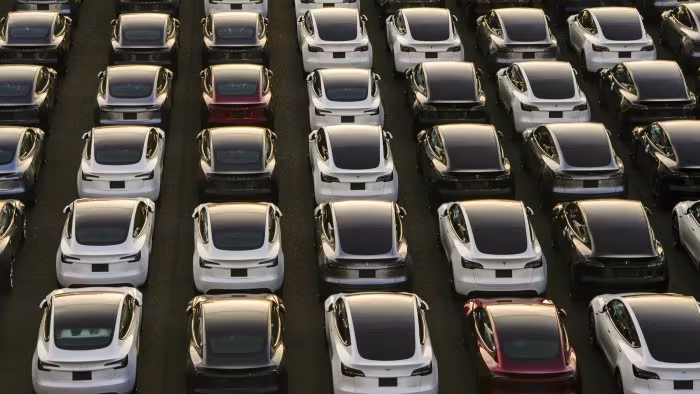
The carmaker delivered 497,099 vehicles in the three months to the end of September, up from 462,890 in the same period last year. That was well above analyst forecasts of 444,000, according to Visible Alpha.
Chief executive Elon Musk has previously warned of difficult quarters ahead for the company because of President Donald Trump’s anti-EV policies, including the tax credit cancellation and the rollback of rules cutting vehicle emissions.
But consumers rushed to buy electric cars ahead of the expiry of the tax credits on September 30, creating a temporary boom that boosted Ford’s EV sales during the third quarter by 30 per cent and doubled General Motors’ EV sales to a quarterly record of 66,501.
Tesla did not provide a regional breakdown of deliveries, but analysts have estimated that in the US they rose 11 per cent compared with the third quarter last year.
A sales decline in China also eased after Tesla launched an upgraded version of its flagship Model Y sport utility vehicle. Overall, its share of the world’s largest car market rose by one percentage point in August compared with a year earlier, ending a 10-month run of losses.
Tesla’s energy storage business also did well, deploying a record 12.5GWh of products in the quarter according to the company.
The outlook, however, remains challenging. Despite deliveries beating expectations, Tesla shares fell slightly on Thursday.
Ford’s chief executive Jim Farley has predicted that EV sales in the US could slow to about 5 per cent of the total market, about half of today’s figure.
Demand for Teslas in Europe also continues to be weak in the face of stiff competition from new EV models by BYD and others, and a backlash against Musk’s politics.
Tesla sales fell 40 per cent in the EU and the UK in July and 23 per cent in August, according to European car industry body Acea.
In a letter to the US Environmental Protection Agency last week, Tesla said the proposed reversal of rules to cut greenhouse gas emissions would “deprive consumers of choice and extensive economic benefits, have negative effects on human health, and further impact the integrated North American automotive sector”.
Wedbush analyst Daniel Ives described the result as “a great bounceback quarter”, but added: “There is still work to do to gain further ground from a delivery perspective.”
As Tesla’s automotive revenues have fallen, Musk has tried to convince investors that the company’s future lies in its self-driving “robotaxi” service, which launched in the US this year.
Tesla’s board has proposed a pay package that would give Musk 12 per cent of the company’s shares if, over the next decade, he can lift its valuation eightfold to $8.5tn, increase its earnings 24 times and sell millions more cars.
Additional reporting by Gloria Li in Hong Kong